
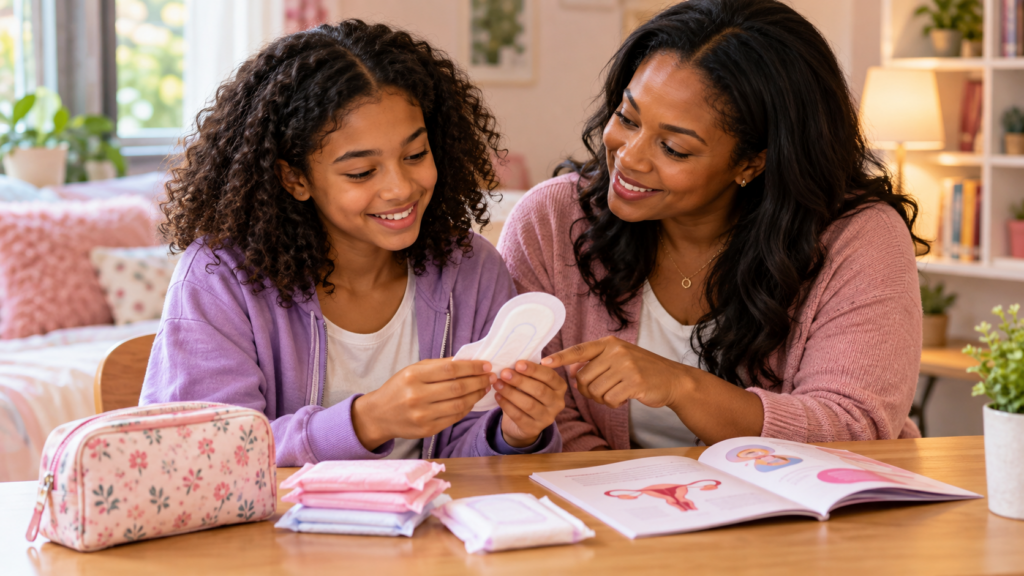
Getting your first period is an important milestone in growing up. It can bring excitement, curiosity, confusion, or even a little nervousness. All of these feelings are normal.
For many young girls, the first menstrual cycle comes with questions: What is happening to my body? Will it hurt? How long will it last? What products should I use?
The most important thing to remember is that menstruation is a natural part of life, and there is nothing to be embarrassed about.
Understanding what to expect can help you feel more confident, prepared, and comfortable.
What Is a Period?
A period, also called menstruation, happens when the body sheds the lining of the uterus. This lining leaves the body through the vagina as menstrual blood.
Menstruation is a normal part of puberty and reproductive development.
Most girls begin menstruating between ages 10 and 15, although some start earlier or later. Everyone’s body develops at its own pace.
There is no single correct age to get your first period.
What to Expect During Your First Period
Your first period may be lighter or shorter than future periods. Some girls notice only a few spots of blood, while others experience a more noticeable flow.
Menstrual blood can appear bright red, dark red, or brown. These colors are generally normal.
You might also experience:
- Mild cramps in your lower abdomen
- Tender breasts
- Bloating
- Tiredness
- Changes in mood
- Lower back discomfort
Not everyone experiences these symptoms, and their intensity can vary.
During the first few years, menstrual cycles may also be irregular as the body adjusts.
Choosing the Right Menstrual Products
There are several products available to help manage your period comfortably.
Sanitary Pads
Pads attach to your underwear and absorb menstrual blood. They come in different sizes and absorbency levels.
Many girls find pads convenient when experiencing their first period because they are easy to use.
Tampons
Tampons are inserted into the vagina to absorb menstrual blood. They come in different absorbency levels and should be changed every 4–8 hours, never left in longer than eight hours.
Period Underwear
Period underwear is designed with absorbent layers that help manage menstrual flow. Some girls use it alone for lighter periods or as additional protection.
Menstrual Cups
Menstrual cups are reusable products inserted into the vagina to collect menstrual blood. They require learning proper insertion, removal, and cleaning techniques.
The best product is the one that feels comfortable, works for your needs, and can be used safely.
Taking Care of Yourself During Your Period
Good menstrual hygiene supports comfort and overall health.
Helpful habits include:
- Changing pads regularly, generally every few hours or sooner when needed
- Washing your hands before and after changing menstrual products
- Washing the external genital area gently with water
- Wearing clean, comfortable underwear
- Avoiding scented products or harsh cleansers around sensitive areas
- Keeping extra menstrual supplies available at school or while traveling
You do not need special perfumes or scented feminine washes to stay clean during your period.
Your body has natural ways of maintaining its balance.
Preparing a First-Period Kit
Having a small period kit ready can help you feel more prepared, especially while attending school.
Consider keeping these items in a small pouch or bag:
- Two or three sanitary pads
- A clean pair of underwear
- A small resealable bag for storing soiled clothing
- Tissues
- A small personal calendar or period-tracking notebook
Being prepared can reduce stress if your period starts unexpectedly.
What If You Get Your Period at School?
Getting your first period at school can feel overwhelming, especially if you weren’t expecting it.
Remember, you are not alone.
If you don’t have menstrual products available, consider speaking with a school nurse, counselor, teacher, or another trusted adult.
Many schools have menstrual supplies available for students who need them.
You deserve to feel comfortable and supported while attending school.
Understanding Period Cramps
Mild menstrual cramps are common and occur because the uterus contracts to help shed its lining.
Some girls find relief through:
- A warm heating pad on the lower abdomen
- Gentle physical activity
- Rest
- Drinking water
- Comfortable clothing
If cramps are severe, interfere with school or everyday activities, or do not improve with usual care, speak with a healthcare professional.
Likewise, seek medical advice if bleeding is unusually heavy, lasts longer than seven days, or you feel dizzy or faint.
Never Be Afraid to Ask Questions
One of the most important parts of feminine-care education is creating an environment where young girls feel comfortable discussing their bodies.
Periods should never be a source of shame.
Parents, caregivers, teachers, healthcare professionals, and trusted mentors can help answer questions and offer reassurance.
Learning about your body gives you the knowledge to make informed decisions about your health and well-being.
Confidence begins with understanding.
The Femi Care Project: Education, Dignity, and Support
At The Femi Care Project, we believe every girl deserves access to accurate information, essential feminine-care products, and compassionate support.
Our mission is to make feminine-care education and resources accessible to women and girls regardless of their background or circumstances.
Through education, community workshops, hygiene products, and outreach, we are committed to helping girls approach the changes of growing up with confidence and dignity.
Your first period is not something to fear or hide.
It is one part of your body’s natural development, and you deserve the knowledge, resources, and support to navigate it comfortably.
Because every girl deserves to grow with confidence, understanding, and dignity.
We Are Our Sister’s Keeper!
The Femi Care Project — Empowering Women and Girls Through Education, Access, and Compassion.